Understanding the Endocannabinoid System
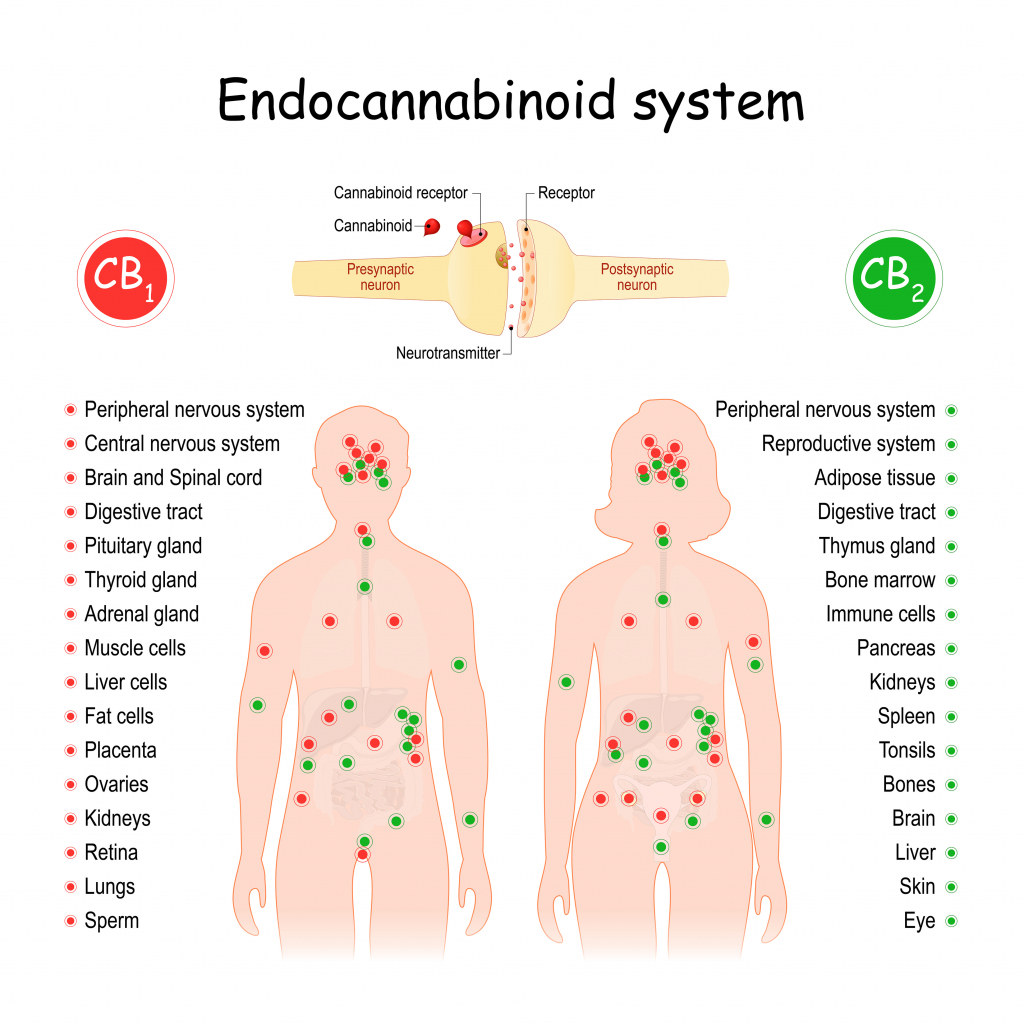
Within the human body, there are a variety of systems that regulate how we feel by controlling key functions such as mood, appetite, pain, and memory. One such systems uses naturally occurring chemicals, called endocannabinoids, to help maintain internal balance (homoeostasis)— this is known as the endocannabinoid system. Cannabinoids, whether produced by the body or introduced from external sources like cannabis, can alter this system and influence these functions, hence why cannabis-derived products can have noticeable effects on how we feel, think, and perceive pain . Synthetic cannabinoids receptor agonists (SCRAs), commonly known as ‘Spice’, are a class of lab-made drugs that affect the endocannabinoid system and are designed to mimic the effects of cannabis; however, they are far more dangerous and unpredictable in comparison. Originally developed for research purposes, SCRAs are now among the fastest growing class of recreational drugs in the UK, particularly among vulnerable populations such as homeless or imprisoned individuals, due to their low cost and ability to evade standard drug testing. Unlike cannabis, which contains THC, synthetic drugs like Spice use slightly altered chemicals that overwhelm the body’s natural balance, often leading to a much stronger and harmful effects. Frequent use of these synthetic cannabinoids can cause serious health problems like a fast heartbeat, high blood pressure, heart attacks, and even strokes.
Why Spice Isn’t Always Illegal
One reason synthetic cannabinoids like Spice aren’t always illegal is because their chemical structure is slightly different from THC. To get around drug laws, manufacturers make small tweaks to the way these compounds are built — a tactic called “scaffold hopping.” Most synthetic cannabinoids share a basic structure made up of four mains parts—a head, a linker, a core, and a tail— where each part can be swapped or modified. As a result, some versions can act in unexpected ways and cause dangerous side effects. These small adjustments help create new variants that might look similar but behave differently in the body. This flexibility not only helps these SCRAs bypass drug laws by appearing as ‘new’ substances but also increases the risk of unexpected and dangerous side effects

Synthetic Cannabinoids act like Antidepressants
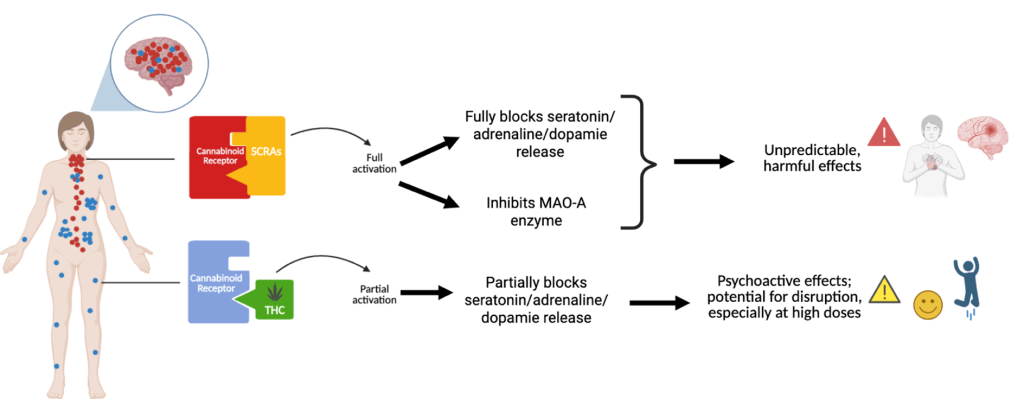
Researchers have observed that some synthetic cannabinoids are both structurally and functionally similar to a type of antidepressant known as MAOIs (monoamine oxidase inhibitors). These drugs work by blocking enzymes that breakdown important chemicals like serotonin, dopamine, and adrenaline— all linked to mood and energy— and are often used in treatment for conditions like depression and Parkinson’s. One of these enzymes, termed MAO-A, also clears out tyramine: a compound found in foods like aged cheese, cured meats, and beer. When this enzyme is blocked, tyramine can build up and trigger a dangerous spike in blood pressure, known as a hypertensive crisis.
From these observations, the researchers hypothesized that SCRAs may in fact also act like certain antidepressants by blocking these MAO enzymes. The researchers used computer simulation modelling and observed that some of these Spice compounds could “fit” into MAO-A enzyme in a way that blocks its function—a bit like putting the wrong key into a lock. When the binding site is already occupied, even if the correct molecule arrives (the right key), the enzyme cannot function properly. Laboratory experiments confirmed that several SCRAs did in fact block the MAO-A enzyme, and even though it was not completely shut down, even a partial block is dangerous. For example, if an individual uses a synthetic cannabinoid and unknowingly eats foods high in tyramine, the body might not be able to break it down, leading to a dangerous increase in blood pressure.
What Are We Missing About Synthetic Cannabinoids?
This study offers a new perspective on synthetic cannabinoids, showing the dangers that go beyond just mimicking the effects of cannabis. One big challenge of drug research is linking lab results to real life use and here the SCRAs were tested in isolation, in controlled doses, and in a lab environment. But in the real world, these drugs are taken in unknown amounts, often alongside other substances, and usually with no quality control. This means people might be exposed to combinations that block the function of the MAO-A enzyme very strongly or in different ways. We still don’t know if the level of enzyme blocking seen in the lab happens in people, or what the long-term effects of repeated use might be. Research also doesn’t tell us how quickly MAO-A is blocked and for how long. If someone takes a single dose of Spice, does it affect their enzyme function for a few hours? A few days? Could regular use build up over time and worsen the effects? And what are the differences in the effects based on the route of administration? These are all important questions that should be addressed in future studies.
Why SCRAs Shouldn’t Be Treated Like Cannabis
Too often, synthetic cannabinoids are dismissed as simply a stronger version of cannabis, reinforcing the idea that their harm only comes from how they affect those same parts of the brain. But this narrow view overlooks the bigger picture:synthetic cannabinoids are not just cannabis substitutes— they are chemically distinct, pharmacologically unpredictable, and in some cases behave more like unregulated antidepressants, interfering with compounds that play crucial roles in heart and brain function. In our hurry to villainize cannabinoids we’ve missed the real threat.
This calls for a fundamental shift in public health messaging and regulatory focus. Rather than pouring our resources into blanket campaigns against cannabis, policymakers should prioritise educating the public on the crucial differences between cannabis and synthetic alternatives like Spice. These compounds should be assessed—and regulated— based on the specific risks they pose, not simply grouped under a catch-all “cannabinoids are dangerous” narrative. If SCRAs act similarly to antidepressants, they should be treated with the same caution—prescribing antidepressants involves strict regulation and patient education. At a minimum, users deserve clear information about the risks: education is always a more effective deterrent than fear.

 ALICE EXPLAINS
Leave a comment